
Ford Tire Pressure Sensor Light: What It Means and How To Reset It
When the tire-and-exclamation-mark light pops up on your Ford’s dashboard, it’s your car’s way of saying, “Hey, check your tire pressure!”
It’s not always an emergency, but it should never be ignored. Here’s what the Tire Pressure Monitoring System (TPMS) does, why the light might come on, and how to reset it.
What Is a Tire Pressure Monitoring System (TPMS)?
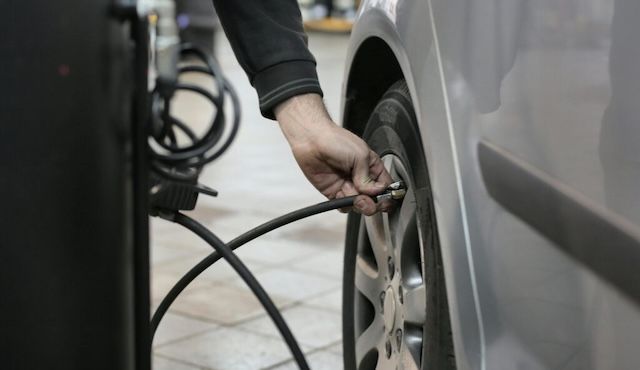
The Tire Pressure Monitoring System (TPMS) is an electronic system designed to alert you when one or more tires are under- or over-inflated. It keeps your tires within safe pressure limits, helping maintain fuel efficiency, braking performance, and handling stability.
A Brief History
TPMS technology appeared in high-end European cars in the 1990s. After the Transportation Recall Enhancement, Accountability, and Documentation Act, or TREAD Act, was passed in the U.S., all new vehicles sold after September 1, 2007, were required to include TPMS.
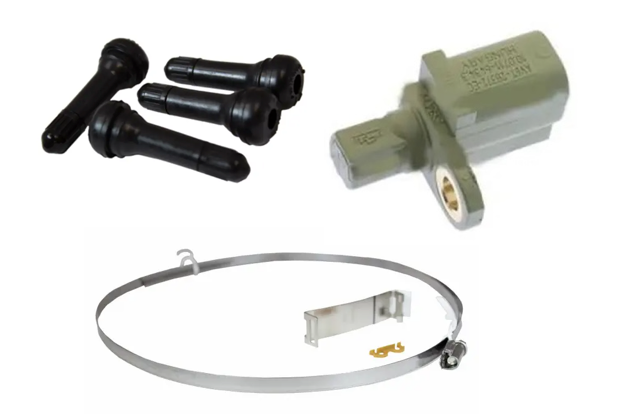
Ford began using TPMS systems as early as 2002, initially with banded sensors mounted in the center of the rim, a system most common on models sold from 2006 through 2009. From 2010 on, valve stem-mounted sensors were phased in. To confirm which type of sensor your Ford model has, use our VIN decoder to order the correct part.
How It Works
Most modern Ford vehicles use a direct TPMS, meaning there’s a small pressure sensor inside each wheel, typically attached to the valve stem. Each sensor transmits air pressure and temperature readings to your vehicle’s onboard computer. If a tire drops about 25% below the recommended level, the system triggers a dashboard warning.
How TPMS Differs From Speed Sensors
It’s easy to confuse tire pressure sensors with wheel speed sensors, since both affect your vehicle’s safety and performance - but they serve different roles.
- TPMS sensors measure air pressure and temperature inside each tire. They help detect slow leaks or pressure loss.
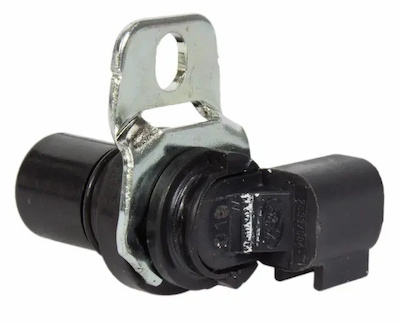
- Wheel speed sensors, part of the ABS (Anti-lock Braking System), track how fast each wheel spins. They help control braking pressure and stability during slippery conditions.
- While both sensors feed data to your Ford’s computer, TPMS sensors don’t measure speed, and wheel speed sensors don’t detect pressure.
- If your ABS or traction control light comes on, that’s a wheel speed sensor issue - not TPMS.
If your dashboard shows both the TPMS and ABS warning lights, it’s best to check both systems, as they operate independently.
What Factors Trigger The TPMS Light?
A TPMS warning doesn’t always mean a flat tire. Common triggers include:
- Cold or warm weather: Air expands and contracts with temperature changes, this can cause the TPMs light to illuminate and go out as the temperature settles.
- Under- or over-inflated tires: All TPMs systems can measure under inflated tires, many modern direct TPMs systems can also detect over-inflation.
- Damaged tires or valve stems: Slow leaks are often the culprit here, especially if your TPMs light goes on soon after you have pumped up your tire.
- Sensor battery failure: TPMS sensors use small batteries that eventually die (usually after 5–10 years). Replacement and reprogramming is the only solution.
- Recent tire rotation or replacement: The system may need to relearn each wheel’s new position.
How To Reset Your Ford’s TPMS
The reset procedure can differ depending on your model year, but here are general methods:
- Check tire pressures and inflate to the recommended PSI (found on the driver-side door jamb).
- Turn the ignition ON without starting the engine.
- Press and hold the TPMS reset button (if equipped) until the light blinks three times.
- Drive for 10–20 minutes to complete the reset.
Some Fords require using the infotainment menu or a TPMS tool to 'train' each sensor. If your light doesn’t turn off, there may be a faulty sensor that needs replacement. Always check your owners manual for model-specific instructions.
Blue Springs Ford Parts Is Your Trusted Source For OEM TPMS Components
We're one of the largest Ford parts departments in the US. We have a 30-year history of selling wholesale Ford, Lincoln, and Mercury parts, and are centrally located (Missouri), so shipping is fast to both the East and West Coasts.
Your Ford’s TPMS is a vital safety feature that helps you avoid poor handling, blowouts, and uneven tire wear. If the light won’t reset or flashes constantly, you may need new sensors. We sell genuine OEM Ford Tire Pressure Sensors, backed by Ford’s replacement parts warranty. Use our VIN decoder to be certain you get the right part, and order your OEM Ford components today.