
Timing Chains vs. Timing Belts: All You Need to Know
The timing belt or timing chain plays a big role in your engine’s valve timing. Timing belts and chains synchronize all of the engine’s operations, ensuring the crankshaft and camshaft(s) rotate in perfect harmony. Without this synchronization, the engine cannot run properly.
Most modern gasoline and diesel-powered engines use either a timing belt or a timing chain to handle this job. While both serve the same function, there are key differences between them that every car owner should know.
The Difference Between Timing Belts And Timing Chains
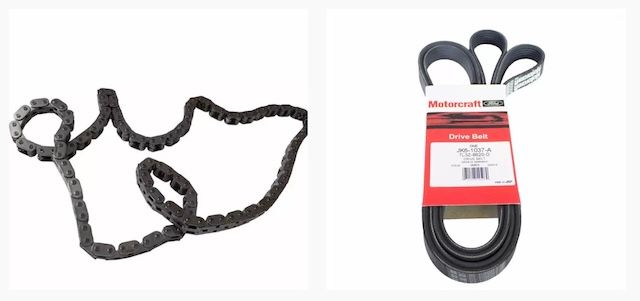
While timing belts and chains do the same work, their construction and maintenance requirements are very different:
- Timing Belts: Made of synthetic rubber and fiber reinforcement cords. Lightweight and quiet, but prone to wear.
- Timing Chains: Made of metal, designed much like a bicycle chain, and lubricated by engine oil inside the engine.
Other key differences between timing chains and timing belts include:
- A timing belt is located outside of the engine, while a chain is internal.
- Timing belts typically rely on spring or hydraulic tensioners.
- Timing chains use tensioners powered by engine oil pressure.
Why Timing Chains Are Typically More Reliable
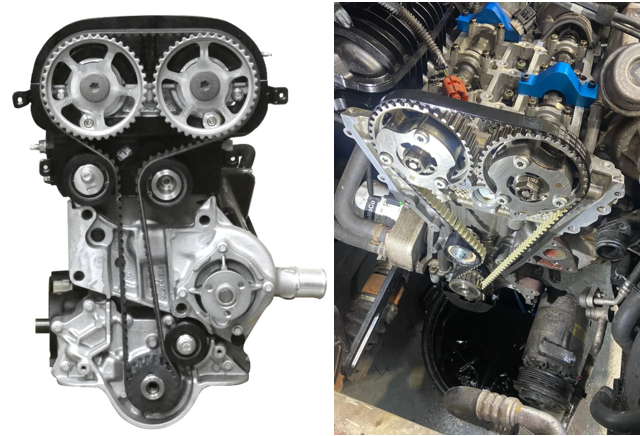
Timing chains have an edge in durability. A belt will almost always need replacement between 60,000 and 100,000 miles, while a chain is designed to last the lifetime of the engine. Chains are stronger, don’t wear the way belts do, and don’t usually have replacement intervals.
The timing chain’s biggest advantage is durability - it’s meant to last as long as the engine itself.
However, that reliability comes with one catch: the timing chain tensioner.
If a chain tensioner fails, the chain loses tension, which can lead to severe engine damage. A failed tensioner can cause chain rattle, poor timing, or even catastrophic engine failure if the chain jumps teeth on the sprockets. That’s why tensioners are one of the most commonly replaced timing-related parts. We stock tensioners for most Ford models, so if yours is worn or failing, don’t hesitate to get it replaced.
| Pros | Cons | |
| Extremely durable, designed to last the life of the engine. | More expensive to build and install. | |
| Timing Chains | No regular replacement interval under normal conditions. | Heavier and slightly noisier than belts. |
| Stronger and more heat resistant than rubber belts. | Reliability depends heavily on the chain tensioner. | |
| Lightweight and quieter than chains. | Must be replaced every 60,000–100,000 miles. | |
| Timing Belts | Less expensive to manufacture. | More prone to stretching and failure. |
| Easier for mechanics to replace. | Regular replacement cost for owners. |
How Timing Belts And Chains Work
Regardless of construction, both belts and chains serve the same purpose and work in a similar manner:
- The crankshaft powers the belt or chain.
- It links to the camshaft(s), which control valve timing.
- Tensioners keep the belt or chain tight to avoid slack.
- In some engines, the belt or chain also powers the oil or water pump.
- If the belt or chain is not properly tensioned, valve timing can drift, leading to misfires, loss of power, or serious engine damage.
Why You Should Also Replace Tensioners With Belts Or Chains
Any time a timing belt or chain is replaced, it’s important to replace the tensioner too. A worn-out tensioner can undo the reliability of even a brand-new chain or belt. Since tensioners are relatively inexpensive compared to the labor required to get to them, most shops and manufacturers recommend replacing both at the same time.
What Happens If A Belt Or Chain Tensioner Fails?

If the tensioner fails, the chain or belt can become loose. This leads to poor timing, rattling noises, misfires, and in the worst case, catastrophic engine damage when pistons and valves collide. The level of damage depends on whether your Ford has an interference or non-interference engine.
Interference engines are designed so that pistons and valves move through the same area, but at different times. This allows for higher efficiency and performance. However, if the timing belt or chain fails, the valves and pistons can collide, often resulting in severe internal engine damage. Many modern Ford engines - like the EcoBoost and Coyote V8 - use this design.
Non-interference engines, on the other hand, keep the pistons and valves completely separated. Even if the timing slips or fails, the two won’t come into contact. While this usually avoids catastrophic damage, this design is less efficient and has become rare in newer Ford vehicles.
Most late-model Ford engines are interference engines, while older pushrod and SOHC engines are more likely to be non-interference.
What Are The Signs Of A Failing Timing Chain Or Timing Belt Tensioner?
If you suspect your timing chain or belt may be going bad, keep an eye out for:
- Rattling or slapping noises from the engine, especially at startup.
- Check engine light triggered by timing-related trouble codes.
- Engine misfires or poor performance.
- Rough idle or stalling.
If you notice these symptoms, it’s important to inspect and replace the tensioner before it causes severe damage.
OEM Timing Belts And Timing Chains From Blue Springs Ford Parts
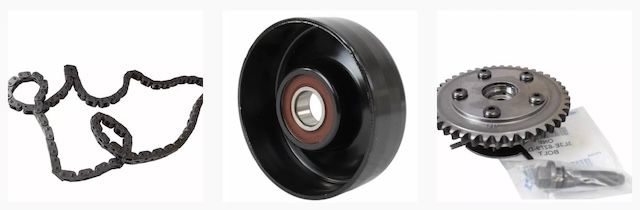
Blue Springs Ford Parts is one of the largest Ford parts departments in the US. We have a 30-year history of selling wholesale Ford, Lincoln, and Mercury parts and are centrally located in Missouri, so shipping is fast to both the East and West Coasts.
Every OEM timing chain, belt and tensioner is backed by Ford's replacement parts warranty, and we stock a massive inventory of OEM components at wholesale prices. Contact us today for more information.