
Suspension Control Arm Buyer's Guide
Control arms are pivotal components of your vehicle's suspension system. They connect the chassis to the wheels and facilitate smooth motion by managing the movement of the wheels in relation to your car's body. The right control arms are critical for optimal vehicle performance, comfort, and safety.
In this guide on control arms, we'll cover:
- What exactly is a suspension control arm, and what is its job?
- Common control arm problems and troubleshooting tips.
- How to replace a Ford control arm.
- Benefits of Ford OEM control arms vs. aftermarket.
What is a Control Arm And Why It's Important?
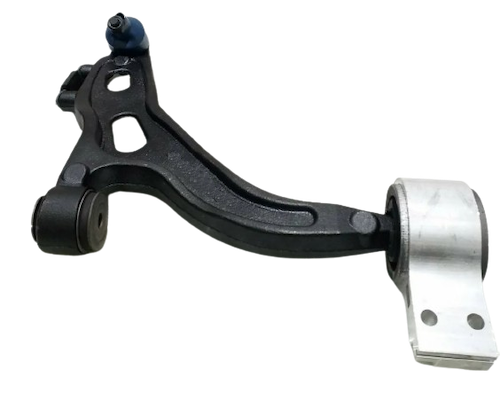
A control arm connects the front wheel to the vehicle's frame (find more details here). It's often shaped like a letter 'A' or 'L,' and pivots on two ends. The broad end attaches to the vehicle's frame and the narrow end attaches to the steering knuckle. This setup allows the wheel to move up and down while maintaining alignment.
Control arms contribute to the vehicle's stability, handling, and ride comfort. Without them, you couldn't control or steer your vehicle's front wheels.
Common Control Arm Problems
When a control arm starts to fail, it will display one or more of the following symptoms:
- A clunking or knocking noise when driving over bumps or making turns
- Your vehicle drifts or pulls to one side
- Uneven tire wear due to bad wheel alignment
- Visible wear or damage to the control arm
- Excessive steering play
- Heavy vibrations in the steering or front wheels
Keep in mind that a failing tie rod end or ball joint might also feel like some control arm issues. You'll want to follow this guide and check all your suspension components to determine the culprit.
How To Replace A Ford Control Arm

Replacing your control arms is a job you can do yourself. As long as you have basic tools, a little automotive knowledge, and a trusted tutorial (like this one) you'll be able to sucessfully complete the repair.
Steps For Replacement
-
Park your vehicle and safely remove the front wheel. You may also want to take photos of the area so you are sure to install the new part exactly as the old.
- Disconnect the old control arm by removing the bolts and connecting them to the frame and wheel hub. You may also need to use a ball joint separator to disconnect the ball joint from the steering knuckle.
-
Install the new control arms, tightening all bolts to the recommended specifications using a torque wrench.
-
Reattach the wheel and tighten the lug nuts.
Once you've finished the job, take your Ford vehicle on a quiet road to check that the control arm and suspension are operating correctly.
The Benefits Of Ford OEM Control Arms
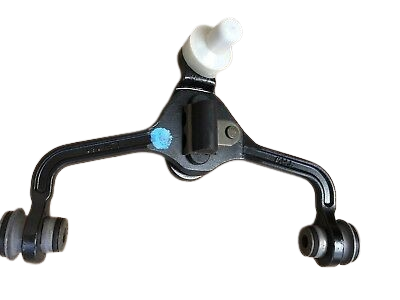
OEM Ford control arms are engineered specifically for Ford vehicles, which guarantees that they will perform as intended by the manufacturer. They are made from high-quality materials and backed by a warranty that aftermarket parts often lack.
By comparison, aftermarket control arms are made to fit a range of vehicles, which means they may not perform as well. Additionally, they may not be made with quality materials or come with much of a warranty. While the aftermarket part may be cheaper to buy, it may cost you more money in the long run because it might not perform as well or last as long as the OEM Ford part (learn more here).
Find OEM Control Arms At Blue Springs Ford Parts
When it comes time to replace or upgrade your Ford's control arms, trust the experts at Blue Springs Ford Parts. With over 30 years in the business, we are one of the largest Ford parts departments in the US and offer a huge selection of OEM parts at wholesale prices. We stock just about any OEM part you might need, all backed by Ford’s replacement parts warranty. Contact our team today and get the perfect control arms at the best price.