
What Is An Engine Control Module And Why Is It Important?
The Engine Control Module (ECM), also known as the Engine Control Unit (ECU), is a pivotal component in modern vehicles. It's essentially a small computer that governs the engine's operation, aiming to boost both efficiency and performance by fine-tuning the fuel-air mixture. This article delves into the significance of the ECM, exploring its evolution, functionality, and impact on vehicle performance.
Understanding The Engine Control Module (ECM)
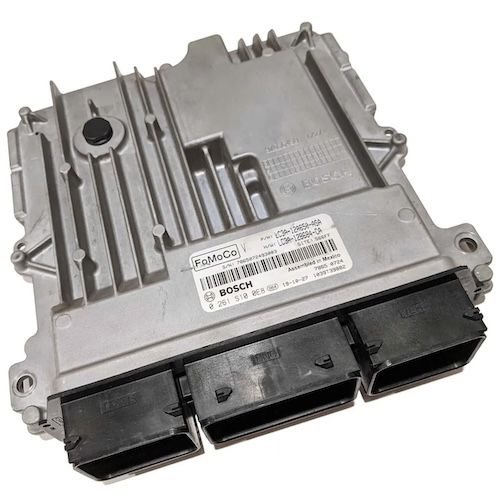
Whether you call it an ECM or ECU, this device is a critical computer system in a vehicle. It manages the engine's operation by coordinating various advanced mechanical and electronic components. This ensures smooth engine performance.
The ECM's programming varies based on several factors, including market positioning, emission standards, drivability, and efficiency goals. ECM programming factors include:
- Market positioning - sporty, entry-level, or luxury model or trim level
- Emissions regulations
- Drivability and efficiency requirements
The Evolution Of Automotive ECMs
ECMs started entering the automotive industry in the late 1970s, driven by the need to reduce emissions and improve fuel economy. Pioneers like Toyota, BMW, and General Motors were among the first to integrate ECMs into their vehicles. Ford also introduced its first ECM in certain Lincoln models in 1978. Initially, these units managed basic functions like carburation and ignition timing. However, with advancements in microprocessor technology in the early 1980s, ECMs took on more complex roles.
The transition from carburetors to fuel injection systems, coupled with innovations like variable intake manifolds and variable valve timing, could only effectively be controlled by ECMs. They could monitor and control hundreds of engine functions and then compare the outputs to predetermined targets and adjust settings thousands of times a second. In 1991, Onboard Diagnostics (OBD) was introduced, allowing mechanics and technicians to diagnose faults electronically.
The late '90s and early 2000s saw further advancements with the introduction of direct injection, turbocharging, and cylinder deactivation, all integrated and managed by increasingly sophisticated ECMs. Modern vehicles rely heavily on ECMs for their functionality. The engine's performance, including acceleration, braking, and overall responsiveness, is heavily influenced by ECMprogramming. Without the modern ECM, your vehicle would be less efficient, less powerful, and far less responsive.
How Does An ECM Function?
A typical ECM resembles a small rectangular box. It contains an electronic circuit board similar to a computer's internals. Its location varies by manufacturer but is commonly found in the engine bay or front footwell and sometimes in the trunk.
The ECM gathers data from various engine sensors and other vehicle control units, comparing these inputs against pre-set parameters. It adjusts the engine's operation in real-time, and in cases of significant deviations, it logs faults for diagnosis with an Onboard Diagnostics (OBD) tool.
The ECM plays a vital role in optimizing the fuel-air mixture through various methods like valve timing adjustment, exhaust gas recirculation management, fuel injector pressure control, and more.
How An ECM Optimizes The Fuel-Air Mixture
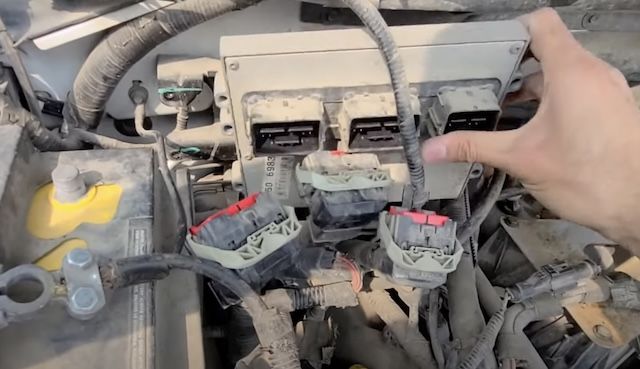
Image Credit: QuiteAlright
Every model will have an ECM programmed to work with that specific vehicle. Even if the physical ECM unit looks the same, it will have unique programming that will only work correctly on the vehicle it was designed for. Systems that work in conjunction with the ECM are:
- Ignition Timing
- Valve Timing
- Exhaust Gas Recirculating (EGR) Control
- Variable Intake Manifold Actuation
- Fuel Injector Pressure Regulation
- Boost Pressure Control On Turbocharged Engines
A malfunctioning ECM can lead to noticeable degradation in performance of any or all of these systems, and a complete failure renders the vehicle inoperative.
Find OEM Replacement ECMs At Blue Springs Ford Parts
If you suspect your ECM is failing, Blue Springs Ford has the perfect OEM replacement part for you at wholesale prices. Use our VIN decoder to ensure you order the right part.
We have a 30-year history of selling wholesale Ford, Lincoln, and Mercury parts. Being one of the largest Ford parts departments in the US means we stock just about any part you might need. Every OEM part is backed by Ford’s replacement parts warranty. Get in touch with our sales team today and get the perfect OEM part at the best price.