
Does My Ford Have a Timing Belt Or Timing Chain?
Wondering whether your Ford has a timing belt or a timing chain? You’re not alone. Many Ford owners ask this question, because knowing which part your engine uses can make a big difference in long-term maintenance. Let's cover the differences between the two, how often each needs replacement, and how to find out what type your Ford uses.
What's The Difference Between A Timing Belt And A Timing Chain?
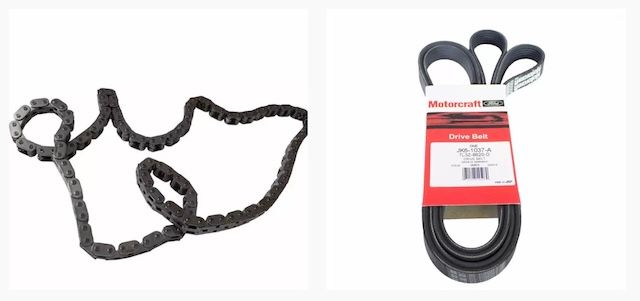
Both timing belts and timing chains serve the same purpose: keeping your engine’s crankshaft and camshaft in sync so valves open and close at the right time. However, they’re made differently and have different lifespans.
- A timing chain is a metal chain, while a timing belt is a reinforced rubber belt.
- Timing chains are located inside the engine and lubricated by engine oil.
- Timing belts are mounted outside of the engine and not oil-lubricated.
Timing chains have been around longer and are generally more durable. Rubber belts became popular in the 1960s because they were cheaper to manufacture and quieter, but chains remained the choice for longevity.
How Often Timing Belts And Timing Chains Need To Be Replaced
One of the most important differences between the two is their maintenance schedules.
- Timing belts wear out more often and need to be replaced every 60,000 to 100,000 miles, depending on the model and driving conditions.
- Timing chains, on the other hand, are designed to last the life of the vehicle. They may still fail if neglected, but with proper oil changes, they usually don’t require replacement.
If your Ford has a timing belt, replacing it on time is critical. A broken belt can lead to bent valves, piston damage, or even a ruined engine. Ignoring a rattly or noisy timing chain can result in the same issues.
Interference Vs Non-Interference Engines
The difference between interference and non-interference designs comes down to how the pistons and valves interact inside the combustion chamber.
In an interference engine, the pistons and valves share the same space at different times, meaning if the timing belt or chain fails, the valves can collide with the pistons, causing serious engine damage. Many modern Ford engines, such as the EcoBoost and Coyote V8, are interference engines.
In a non-interference engine, the pistons and valves never occupy the same space, so even if the timing fails, they won’t hit each other, usually preventing catastrophic damage. However, non-interference designs are less common in newer Fords.
“The general rule is: most modern Ford engines are interference designs for efficiency and performance, while older Ford pushrod and SOHC engines are often non-interference.”
Does Your Ford Have A timing Belt Or Timing Chain?
There isn’t a universal rule for whether a Ford vehicle uses a timing belt or chain - it depends on the year, model, and engine.
- Ford F-150 - Most modern F-150 engines (EcoBoost, V6, V8) use timing chains.
- Ford Mustang - Current Mustang engines, including the EcoBoost and 5.0L Coyote V8, use chains.
- Ford Explorer - Recent models typically use chains, though some older engines may have belts.
- Ford Escape - Many Escape models built in the 2000s came with timing belts, while newer EcoBoost engines switched to chains.
- Ford Focus - Several Focus models (especially early 2000s) came with belts, but later models like the Focus ST moved to chains.
- Ford Fusion - Depending on the engine, you may have a belt (in older 4-cylinder models) or a chain (in newer EcoBoost versions).
- Ford Edge - Generally uses timing chains in more recent models.
The best way to know for sure is still to check your owner’s manual or use our Ford VIN decoder to find the perfect part the first time.
Why This Matters For Ford Owners
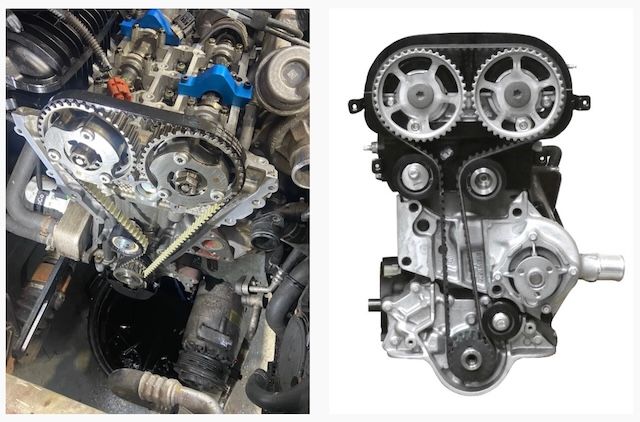
If your Ford has a timing belt, budgeting for replacement is essential. Even though it rarely needs doing, it is considered a maintenance item, not a repair. Catching it before it fails will save you thousands in potential engine damage.
If your Ford has a timing chain, you can breathe easier, but don’t ignore it entirely. Chains rely on proper lubrication, so regular oil changes with the right oil are key to extending its life. Never overlook a noisy or rattly timing chain.
How Much Do Timing Belts Cost?
A timing belt replacement typically costs under $1,000. This varies depending on your Ford model and the labor required to replace it.
How Much Do Timing Chains Cost?
Timing chain replacement is more expensive due to labor intensity, usually ranging from $1k to $3k. However, in most cases you will not have to replace the chain for the life of the vehicle.
Can I Replace A Timing Belt Myself?
It’s possible if you have advanced mechanical skills and the right tools, but it’s a complex job. For most Ford owners, professional installation is recommended, however. If you are up to the job, these are some of the essential tools you’ll need:
- Socket set and ratchet - for removing bolts, covers, and accessories.
- Torque wrench - to tighten bolts to manufacturer specs.
- Camshaft holding tool/crankshaft locking tool - keeps engine in proper timing alignment during the job.
- Feeler gauge - for measuring clearances, if specified.
Can I Replace A Timing Chain Myself?
Replacing a timing chain is even more challenging than a belt. It requires in-depth engine disassembly, so this job is best left to certified technicians. You will need all of the tools mentioned above and may also need to remove other mechanical components to access the chain.
Timing Belt And Chain Replacement Tips
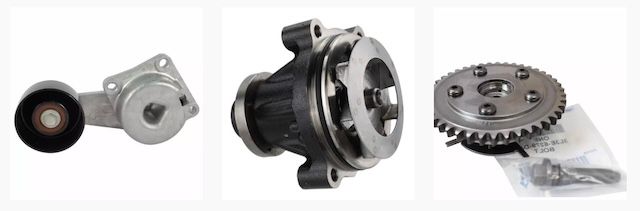
When replacing a timing belt, you’ll usually need more than just the part itself. Mechanics often recommend a 'timing belt kit' since several related components wear at the same rate. Here are a few common items required:
- Timing Belt - the main component that synchronizes the engine.
- Timing Belt Tensioner - keeps the belt tight to prevent slipping.
- Idler Pulleys - guide the belt and reduce friction.
- Water Pump - often driven by the timing belt, so it’s usually replaced at the same time to avoid future labor costs.
- Camshaft and Crankshaft Seals - prevent oil leaks in the timing area.
Fresh coolant and new radiator hoses may also be needed if the water pump is replaced, and the auxiliary or serpentine belt should also be replaced if it shows excessive wear.
“Most Ford mechanics recommend installing a complete timing belt kit (belt, pulleys, and tensioner) to ensure long-lasting reliability.”
Always Choose OEM Ford Timing Components For Your Ford
We're one of the largest Ford parts departments in the US and have a 30-year history of selling wholesale Ford, Lincoln, and Mercury parts. We are centrally located in Missouri, so shipping is fast to both the East and West Coasts.
Every OEM part we sell is backed by Ford's replacement parts warranty, and we stock a massive inventory of OEM components at wholesale prices. Contact us today for more information, and order online today!